Dauphinoise Potatoes Recipe
Dauphinoise potatoes is a dish that my mother-in-law serves up regularly, but one that for some reason I just didn’t have the confidence to do. I’m not sure why that was, as it’s actually pretty easy to make. Perhaps it was because it always tastes so good when my mother-in-law makes it and I just didn’t feel like I could compete. However, I’ve since discovered a really easy dauphinoise potatoes recipe. I’ve adapted the recipe a little just to make it super simple but it still tastes absolutely delicious. In fact, my mother-in-law and father-in-law both tried it one weekend and said it was excellent. So I hope you like it!
Originally from the Dauphiné region in France, this indulgent side dish is a combination of thinly-sliced potatoes, rich cream, and Gruyère cheese, all baked to golden, gooey perfection. It’s quickly become a firm favourite for us as part of our Sunday dinners, but it works with all kinds of different meals.
Preparing Dauphinoise Potatoes may seem intricate, but it’s surprisingly straightforward.
What Are Dauphinoise Potatoes?
Dauphinoise potatoes, sometimes also referred to as potatoes au gratin, are a popular French side dish that has a mouth-watering combination of thinly sliced potatoes, garlic, cream, and cheese all baked in the oven until golden.
In this classic French dish, layers of thinly sliced potatoes are stacked carefully. The real magic happens when you pour a creamy mixture of milk and heavy cream over the potato layers, ensuring that each slice is well coated and will cook to a gentle crisp. The cheese on the top is like the icing on the cake. It’s simply delicious!

One of the elements that sets Dauphinoise potatoes apart from other gratin recipes is the use of Gruyère cheese. Gruyère is a semi-hard Swiss cheese that boasts a nutty, delicious flavour, and melts beautifully. Some recipes may incorporate grated Gruyère cheese throughout the potato layers or simply sprinkle it on top of the casserole before baking. I have seen other recipes with different cheeses, and I once tried using cheddar cheese as I forgot to buy Gruyère cheese, but in my opinion, none of the other cheeses quite hit the mark.
To make Dauphinoise potatoes, you’ll need to gather a few ingredients:
- Floury potatoes (I use King Edward potatoes)
- Double cream
- Whole milk
- Garlic
- Onion
- Cooking Oil
- Gruyère cheese
The baking process for Dauphinoise potatoes generally takes around one hour 15 minutes at a moderate oven temperature, around 190°C (Gas Mark 5), until the potatoes are tender and the top is golden brown—resulting in a perfect balance of soft, creamy textures and delectable, crispy edges.
Ingredients
In this section, you’ll find a breakdown of the essential ingredients for a delicious Dauphinoise Potatoes recipe.
Potatoes
For the perfect Dauphinoise Potatoes, you’ll need:
- 1kg potatoes (King Edward and Maris Piper potatoes work well)
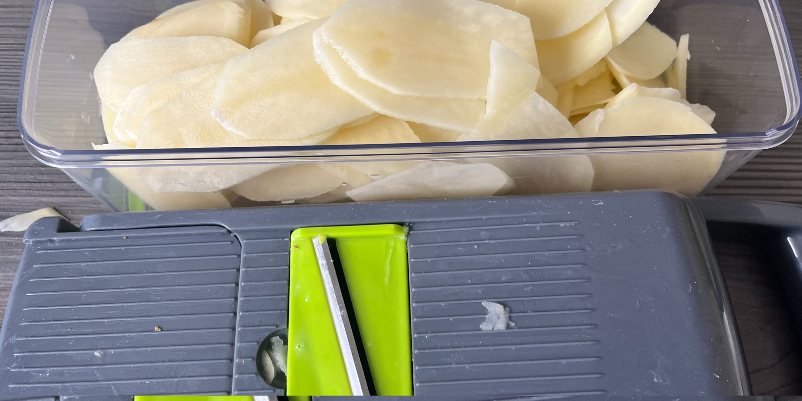
- A vegetable chopper or sharp knife to slice the potatoes 3mm thick
Cream and Milk
The creamy sauce for your Dauphinoise Potatoes requires:
- 300ml double cream
- 300ml whole milk
For added flavour, you can add:
- 1 teaspoon salt
- ½ teaspoon ground black pepper
- ⅛ teaspoon ground nutmeg
- 2 dried bay leaves
- 1 teaspoon freshly chopped thyme leaves
Cheese
A proper Dauphinoise Potatoes recipe wouldn’t be complete without some cheese. Here’s what you’ll need:
- 150g Gruyère cheese (or a similar melting cheese)
Grate the cheese and set it aside to use later in your recipe. The silky, gooey cheese will take your dish to a new level of decadence.
Onion
Last but not least, the humble onion adds depth and flavour to your Dauphinoise Potatoes. To prepare your onion, simply:
- Peel and finely slice 1 onion
- Crush 2 cloves of garlic
These aromatic ingredients will lend a savoury and garlicky touch to your dish, perfectly complementing the creaminess of the sauce.
Preparation
As with most recipes, it’s the preparation that takes a bit of getting used to. Actually cooking Dauphinoise Potatoes is really simple.
Preheat Oven
First, you need to preheat your oven to 190°C (Gas Mark 5). Getting the oven to the right temperature is essential for even cooking and achieving that perfect creamy and cheesy Dauphinoise Potatoes dish.
Prepare the Baking Dish
While the oven is preheating, grease a baking dish with butter. This prevents the potatoes from sticking to the dish and makes cleaning up much easier afterwards.
Dice the Onion
Dice one large onion and cook it in a frying pan on a low heat for 15 minutes.
Slice the Potatoes
Next, it’s time to prepare your potatoes. You will need about 1kg of floury potatoes. I like to use King Edward potatoes, but Maris Pipers work just as well. Peel the potatoes and then slice them into thin, 3mm slices. Place the sliced potatoes in a bowl or pan of cold water to prevent discolouration while you work on the other ingredients.
Create the Cream Mixture
In a large pan, combine the milk, cream and garlic. You can also add other seasonings at this point if you like too. Gently warm the cream mixture over medium-low heat until it’s just heated through, making sure it doesn’t boil. Stir occasionally to mix the flavours and ensure all the ingredients are evenly heated.
If you want to make this dish without using cream, then try out my recipe for Dauphinoise Potatoes without cream.
Assemble the Dish
Now that all components are ready, it’s time to assemble your dish. Drain the potato slices and pat them dry with a clean towel. Add them to your milk and cream and mix it all together thoroughly. Then, use a slotted spatula to carefully layer your potatoes into your dish. Pour over any remaining creamy mixture, Once you’ve added a layer of potatoes, sprinkle the grated Gruyere cheese over the top.
Some people say to cook the dish covered and then uncover for the last 10-15 minutes, but I prefer to start cooking uncovered and then cover with foil once the cheese starts to go golden.
Baking
Cooking Time
Cooking time can vary depending on the thickness of your potato slices and the warmth of your oven. Generally, you should expect to bake your dish for about 1 hour 15 minutes. Nevertheless, keep an eye on it as ovens can vary.
- Thinly slice the potatoes to about 3mm thick, which helps them cook more evenly and become tender.
- Cook in a preheated oven at 190°C (Gas Mark 5) for even heat distribution.
Checking for Doneness
Keep an eye on your Dauphinoise potatoes to make sure they’re cooked to perfection. Here are some tips:
- The top should be golden and slightly crispy.
- Use a fork or a knife to check if the potatoes are tender throughout the dish. If they’re not, allow more time for cooking.
Serving
So, your dish is all cooked, it’s time to serve it up!
Allow Dish to Rest
After you’ve prepared your delicious Dauphinoise Potatoes, allowing the dish to rest for about 10 minutes before serving is essential. This will enable the flavours to meld and ensure an even texture throughout, giving your guests the perfect taste experience.
Garnishing
Dauphinoise Potatoes is a popular French dish that often needs little garnishing, as the ingredients provide ample visual appeal on their own. However, if you’d like to add a vibrant touch to your creation, add a sprinkle of finely chopped parsley or chives just before serving. This will add a pop of colour without overpowering the dish’s flavours.
Pairing with Other Dishes
Dauphinoise Potatoes is a versatile side dish that pairs well with a variety of main courses. A few of your best options include:
- Roast Beef: The rich flavours in roast beef complement the creamy and slightly cheesy Dauphinoise Potatoes perfectly, giving your meal a balance of taste and texture.
- Gratin: A French-inspired meal wouldn’t be complete without a tasty gratin. Combining your Dauphinoise Potatoes with a vegetable gratin creates a sumptuous combination everyone will love.
- Scalloped Potatoes: For a potato-heavy feast, serve your Dauphinoise Potatoes alongside scalloped potatoes. While they both feature creamy sauces and sliced potatoes, the variation in flavours and textures will make for an exciting combo.
Remember, when pairing your Dauphinoise Potatoes with other dishes, consider balancing textures and flavours, so your meal remains enjoyable and doesn’t become too heavy. With these serving tips in mind, you’re sure to impress your guests at your next dinner party.
Dauphinoise Potatoes Recipe

This is my go-to recipe whenever I cook Dauphinoise Potatoes. It's really simple but also really easy. I always make a big portion so that we can use the leftovers for another meal!
Ingredients
- 1 tbsp cooking oil
- Butter for greasing
- 1 large onion
- 1kg large floury potatoes (I use King Edward)
- 300ml double cream
- 300ml whole milk
- 150g Le Gruyère Cheese grated
- 2 cloves garlic/2 tsp lazy garlic
Instructions
- Preheat your oven to 190°C, fan 170°C, Gas Mark 5
- Dice the onion
- Heat the oil in a frying pan on a low heat
- Add the onion and leave to cook on low for 15 minutes
- Finely slice your potatoes - I use my vegetable chopper with the slicer blade attached
- Place the sliced potatoes into a pan of cold water whilst you continue with your preparation. This helps to prevent the potatoes from going brown
- Pour the milk and cream into a large saucepan and stir over a low heat and add the garlic
- Add your sliced potatoes and diced onion to the pan and stir well making sure all the potato slices are coated
- Grease your baking dish
- Use a slotted spatula to layer your potatoes and onions into your baking dish
- Pour over the remaining milk and cream
- Sprinkle your grated cheese over the top of the dish
- Place your dish uncovered into the oven and cook for 1 hour 15 minutes
- Keep an eye on your dish and cover with foil when the cheese begins to turn golden